



View TechnologyMountains e.V.'s top competitors like BDA, Baden-Württemberg International (BW_i), and Federal State of Bavaria.
Daimler AG is one of the biggest producers of premium cars and the world’s largest manufacturer of commercial vehicles with a global reach. The Daimler Group has divisions including Mercedes-Benz Cars, Daimler Trucks, Mercedes-Benz Vans, Daimler Buses and Daimler Financial Services.
As a pioneer of automotive engineering, we continue to shape the future of mobility today: Our focus is on innovative and green technologies as well as on safe and superior automobiles that appeal to and fascinate our customers. Today, we are one of the world’s most successful automotive companies.
Further information and career opportunities can be found on:
http://www.daimler.com/career/job-search/locations/
SG
Public
$59.5B Revenue
http://www.daimler.com/
19.1K Employees
DAI Ticker

Die Fraunhofer-Gesellschaft ist eine der führenden Organisationen für anwendungsorientierte Forschung: Seit der Gründung 1949 stärken Fraunhofer-Institute die Wettbewerbsfähigkeit der Wirtschaft und den Innovationsraum in Deutschland und Europa. Mit ganzheitlichen Angeboten für Wirtschaft und Politik liefert Fraunhofer Lösungen für branchenübergreifenden Impact. Darüber hinaus ist die Fraunhofer-Gesellschaft ein bedeutender Standortfaktor für das Innovationsland Deutschland: Durch die Aktivitäten erhöhen sich Investitionseffekte in der Wirtschaft, erlangen Unternehmen innovationsbasierte Wettbewerbsvorteile, entstehen Arbeitsplätze, Fachkräfte werden qualifiziert und es steigt die gesellschaftliche Akzeptanz moderner Technik.
Munich, DE
Private
$1.1B Revenue
http://www.fraunhofer.de
3.1K Employees
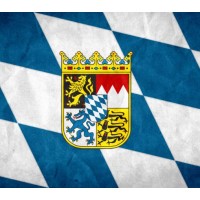
Bavaria is a federal state of Germany. In the southeast of the country with an area of 70,548 square kilometres (27,200 sq mi), it is the largest state, making up almost a fifth of the total land area of Germany, and, with 12.6 million inhabitants, Germany's second most populous state. Munich, Bavaria's capital and largest city, is the third largest city in Germany.
The history of Bavaria stretches from its earliest settlement and formation as a duchy in the 6th century CE (AD) through the Holy Roman Empire to becoming an independent kingdom and finally a state of the Federal Republic of Germany.
The Duchy of Bavaria dates back to the year 555. In the 17th century CE (AD), the Duke of Bavaria became a Prince-elector of the Holy Roman Empire. The Kingdom of Bavaria existed from 1806 to 1918, when Bavaria became a republic. In 1946, the Free State of Bavaria re-organised itself on democratic lines.
Bavaria has a unique culture, largely because of the state's Catholic majority (52%) and Conservative traditions. Bavarians have traditionally been proud of their culture, which includes festivals such as Oktoberfest and elements of Alpine symbolism. The state also has the largest economy of any of the German states, giving it a status as a rather wealthy German region.
Modern Bavaria also includes parts of the historical regions of Franconia, Upper Palatinate and Swabia.
(Source: https://en.wikipedia.org/wiki/Bavaria, 02nd June 2016)
DE
Private
http://www.bayern.de/
5K Employees
Top TechnologyMountains e.V. Employees
-

Daniela Jardot
Geschäftsführerin at TechnologyMountains e.V.
Villingen-Schwenningen, BW, DE1
Related Companies




G2Crowd Trusted

300K+
Plugin Users
