


View OSSOPCA's top competitors like Department of Animal Husbandry and Dairying, G. B. Pant University Of Agriculture & Technology, and ICAR Central Institute For Research On Goats.
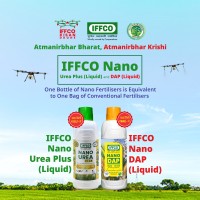
Indian Farmers Fertiliser Cooperative Limited (IFFCO) is one of India's biggest cooperative society which is wholly owned by Indian Cooperatives. Founded in 1967 with just 57 cooperatives, we are today an amalgamation of over 36,000 Indian Cooperatives with diversified business interests ranging from General Insurance to Rural Telecom apart from our core business of manufacturing and selling fertilisers. With our vast marketing network of over 36,000 cooperative societies we reach more than 5.5 Crores (55 million) farmers in India. The Marketing Division of IFFCO has the herculean task of providing fertilisers to the nooks & corners of India, reaching farmers who live in some of the most challenging terrains and locations in the world. The impact of IFFCO extends across the world with joint ventures like JIFCO- Jordan, KIT-Dubai, OMIFCO-Oman, ICS-Senegal.
New Delhi, IN
Private
$3.3B Revenue
https://www.iffco.in
1.7K Employees
The Indian Council of Agricultural Research (ICAR) is an autonomous organisation under the Department of Agricultural Research and Education (DARE), Ministry of Agriculture and Farmers Welfare , Government of India. Formerly known as Imperial Council of Agricultural Research, it was established on 16 July 1929 as a registered society under the Societies Registration Act, 1860 in pursuance of the report of the Royal Commission on Agriculture. The ICAR has its headquarters at New Delhi. The Council is the apex body for co-ordinating, guiding and managing research and education in agriculture including horticulture, fisheries and animal sciences in the entire country. With 101 ICAR institutes and 71 agricultural universities spread across the country this is one of the largest national agricultural systems in the world. The ICAR has played a pioneering role in ushering Green Revolution and subsequent developments in agriculture in India through its research and technology development that has enabled the country to increase the production of foodgrains by 5.6 times, horticultural crops by 10.5 times, fish by 16.8 times, milk by 10.4 times and eggs by 52.9 times since 1950-51 to 2017-18, thus making a visible impact on the national food and nutritional security. It has played a major role in promoting excellence in higher education in agriculture. It is engaged in cutting edge areas of science and technology development and its scientists are internationally acknowledged in their fields.
New Delhi, IN
Private
https://icar.org.in/
2.2K Employees

Chennai, IN
Private
$44.7M Revenue
http://tanuvas.ac.in
65 Employees
Related Companies















G2Crowd Trusted

300K+
Plugin Users
