


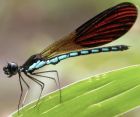
View Odonata Central's top competitors like BugGuide, Earthways Center, and Field Studies Council.
NatureServe, a non-profit organization, provides high-quality scientific expertise for conservation. Our dynamic and impactful data, tools, and resources help guide conservation action where it’s needed most. We envision a world where decision-makers fully understand the importance of science in identifying and protecting our precious animals, plants, and ecosystems.
The NatureServe network includes many faces, names, and expertise from the United States, Canada, and Latin America. More than 1,000 conservation professionals work to ensure that relevant and reliable science is driving important conservation action.
Arlington, Virginia, US
Non profit
$12.3M Revenue
http://www.natureserve.org
64 Employees

Field Studies Council is an environmental education charity. Founded in 1943, we are best known for providing residential and day field trips for those studying biology and geography. But our mission is to create outstanding opportunities for everyone to learn about nature.
We are the only environmental education charity dedicated to helping people of all ages to experience the environment at first hand; to discover, explore and be inspired by the natural world.
Each year over 140,000 people visit our Centres either as a child on a family holiday, a young person on a school fieldtrip, an adult on a leisure learning course or a teacher on a professional development course.
Shrewsbury, GB
Non profit
$81.4M Revenue
http://www.field-studies-council.org
270 Employees
We are an international nonprofit organization established in 1971, based in Portland, Oregon, with staff located in 16 different states. We work at the forefront of invertebrate protection worldwide, harnessing the knowledge of scientists and the enthusiasm of citizens to implement conservation programs. We take action by protecting endangered species and their habitat, training thousands of farmers and land managers to better protect and manage habitat, producing ground-breaking publications on insect conservation, and raising public awareness about the invertebrates of forests, prairies, deserts, creeks, wetlands, and oceans. Our methods focus on scientific analysis, applied research, advocacy, and education to defend invertebrates such as bees, butterflies, mollusks, and dragonflies.
Portland, Oregon, US
Non profit
$19.9M Revenue
http://www.xerces.org
69 Employees


G2Crowd Trusted

300K+
Plugin Users
