


View Mittelschule's top competitors like Bund der Freien Waldorfschulen e.V., Federal State of Bavaria, and Integrative Montessori Schule.
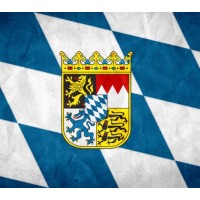
Bavaria is a federal state of Germany. In the southeast of the country with an area of 70,548 square kilometres (27,200 sq mi), it is the largest state, making up almost a fifth of the total land area of Germany, and, with 12.6 million inhabitants, Germany's second most populous state. Munich, Bavaria's capital and largest city, is the third largest city in Germany.
The history of Bavaria stretches from its earliest settlement and formation as a duchy in the 6th century CE (AD) through the Holy Roman Empire to becoming an independent kingdom and finally a state of the Federal Republic of Germany.
The Duchy of Bavaria dates back to the year 555. In the 17th century CE (AD), the Duke of Bavaria became a Prince-elector of the Holy Roman Empire. The Kingdom of Bavaria existed from 1806 to 1918, when Bavaria became a republic. In 1946, the Free State of Bavaria re-organised itself on democratic lines.
Bavaria has a unique culture, largely because of the state's Catholic majority (52%) and Conservative traditions. Bavarians have traditionally been proud of their culture, which includes festivals such as Oktoberfest and elements of Alpine symbolism. The state also has the largest economy of any of the German states, giving it a status as a rather wealthy German region.
Modern Bavaria also includes parts of the historical regions of Franconia, Upper Palatinate and Swabia.
(Source: https://en.wikipedia.org/wiki/Bavaria, 02nd June 2016)
DE
Private
http://www.bayern.de/
5K Employees
At St. George’s, we believe that school is a fundamental chapter in a lifetime of learning, and we aim to make it an extraordinary one. When Marietta Horton founded St. George’s Schools in 1985, she had a unique vision: to offer pupils infinite opportunities to excel, and to lead a life that makes a difference.
It is through this culture that St. George’s British International Schools have become a place where children love to go to school, from 2 to 18 years old.
Our schools foster this original vision and have grown into distinctive, highly-regarded institutions that pair exceptional academic education that pushes beyond the core curriculum, with a caring pastoral infrastructure which values each individual.
At St. George’s we follow the Early Years Foundation Stage Framework and the National Curriculum of England from Pre-Nursery to Year 11. We provide the opportunity to choose IGCSE studies, followed by the International Baccalaureate (IB) in the final two years before graduation. The St. George’s British International Schools are IB World Schools offering the IB Diploma Programme (DP) and the IB Career-related Programme (CP).
The four-strand approach - education, innovation, culture and responsibility - is conveyed through relevant programmes and experiences that are collaborative, integrative and pioneering. Our graduates join the global community as confident discerning thinkers who are resilient, socially conscious and prepared to make the most of their opportunities. Leading a life that makes a difference, embracing responsibility and seeking to influence others positively.
The British International Schools located in Munich, Cologne and Düsseldorf Rhein-Ruhr are hallmarks of the St. George’s identity. Each of them have an individual distinct allure, while at the same time embrace common values and guiding principles.
Cologne, DE
Private
$57.4M Revenue
http://www.stgeorgesschool.com
318 Employees

At St. Stephen’s we certainly prize and celebrate academic success, but as a non-selective school we realise that it is the progress of individuals that really counts and we seek to maximise that progress for each student in a safe and nurturing environment.
TH
Education
http://www.sis.edu/bangkok
74 Employees
Top Mittelschule Employees
-

Philip Dulle
Geschichtslehrer at Mittelschule
Vienna, Austria1 -

Carla Kerscher
Lehrerin at Mittelschule
Munich, BY, DE2 -

Franziska Borgogno
Mittelschullehrerin Chemie at Mittelschule
Winterthur, ZH, CH -
1


Related Companies


G2Crowd Trusted

300K+
Plugin Users
