


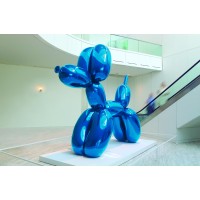
View Jeff Koons, LLC's top competitors like Cai Studio, Christo and Jeanne-Claude Official, and Hirst Holdings Limited.
Located in Pittsburgh, Pennsylvania, the place of Andy Warhol’s birth, The Andy Warhol Museum holds the largest collection of Warhol’s artworks and archival materials. The museum is one of the most comprehensive single-artist museums in the world.
Pittsburgh, Pennsylvania, US
Non profit
https://www.warhol.org/
98 Employees
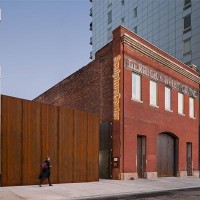
SculptureCenter leads the conversation on contemporary art by supporting artistic innovation and independent thought highlighting sculpture’s specific potential to change the way we engage with the world. Positioning artists’ work in larger cultural, historical, and aesthetic contexts, SculptureCenter discerns and interprets emerging ideas. Founded by artists in 1928, SculptureCenter provides an international forum that connects artists and audiences by presenting exhibitions, commissioning new work, and generating scholarship.
For nearly 20 years, SculptureCenter has presented works by over 750 emerging and established artists through its annual exhibition program, and today, SculptureCenter is considered one of New York’s most adventurous kunsthalles. Placing importance on investment, inclusiveness, independence, transparency, and rigor, SculptureCenter has developed a strong reputation for championing under-recognized and emerging artists, many of whom have gone on to celebrated and substantial careers such as: Turner Prize winner Charlotte Prodger and nominee Anthea Hamilton, Sanford Biggers, Nairy Baghramian, Tom Burr, Liz Glynn, Rochelle Goldberg, Camille Henrot, Leslie Hewitt, Rashid Johnson, Ugo Rondinone, Katrín Sigurdardóttir, Alexandre Singh, Monika Sosnowska, Gedi Sibony, Mika Tajima, and recent Hugo Boss Prize winners Anicka Yi and Simone Leigh.
As a non-collecting museum, SculptureCenter’s annual exhibition program includes 1–2 commissioning programs by mid-career artists, 10–15 projects by emerging artists, and 3–6 solo and group exhibitions in addition to an exciting series of special projects by established and emerging artists. SculptureCenter continuously offers a dynamic series of free public programs and events that feature artist talks, performances, film screenings, and publications.
New York, New York, US
Non profit
$96.7M Revenue
https://www.sculpture-center.org/
19 Employees
The Robert Rauschenberg Foundation builds on the legacy of Robert Rauschenberg (1925-2008) who believed strongly that creative practitioners could serve as catalysts for social change. He shared his appreciation for chance and the everyday by seeking to act in the “gap” between art and life. He was also a gifted collaborator, breaking disciplinary boundaries by experimenting with scientists, performers, and visual artists. As such, we celebrate new and even untested ways of thinking and acting.
The Foundation promotes in-depth research and partnerships for staff, curators, critics, scholars, and students that open the artist’s life and work to wider interpretation and understanding. Its philanthropic activities, driven in part by a recently constituted Artists Council, primarily support small to midsize arts and socially engaged organizations that are contrarian and experimental, even courageous, in driving towards equity. In addition, the Foundation holistically sustains the creative life and well-being of artists across the disciplines by providing for a range of needs including time to think during multi-week residencies, funding for new commissions, and emergency medical grants.
Finally, the Foundation supports exhibitions, publications, and special projects across the globe that reflect Rauschenberg’s joyful, responsive, and irreverent approach to making art while living an empathetic and meaningful life.
New York, New York, US
Non profit
http://www.rauschenbergfoundation.org
28 Employees
Top Jeff Koons, LLC Employees
-

Jeff Koons
Chief Marketing Officer at Jeff Koons, LLC
New York, NY, US24 -

Eunkyung Lee
Sculptor at Jeff Koons, LLC
New York, NY, US32 -

Liz Kelsey
Registrar at Jeff Koons, LLC
New York, NY, US23 -

Luis Garcia
Sr. Graphic Designer | Office Manager at Jeff Koons, LLC
New York, NY, US25 -
Pat Carney
General Manager at Jeff Koons, LLC
New York, NY, US1 -
Nate Cohen
Administration Assistant at Jeff Koons, LLC
New York, NY, US -

Minnie Leggett
Accountant at Jeff Koons, LLC
New York, NY, US25 -
Tom Monsees
Sculptor at Jeff Koons, LLC
New York, NY, US21 -
Juliet Blackwell
Artist Assistant at Jeff Koons, LLC
United Kingdom1
Related Companies







G2Crowd Trusted

300K+
Plugin Users
