


View Charkha's top competitors like Alpha One Mall, Banjara Market, and Craftsvilla.
Vardhman Group is a leading textile conglomerate in India having a turnover of $1.1 bn. Spanning over 22 manufacturing facilities in five states across India, the Group business portfolio includes Yarn, Greige and Processed Fabric, Sewing Thread, Acrylic Fibre and Alloy Steel.
Vardhman Group manufacturing facilities include over 10,48,160 spindles, 450 metric Tons per day yarn and fibre dyeing, 1300 shuttleless looms, 115 mn meters per annum processed fabric, 34 tons per day sewing thread, 20000 metric tons per annum acrylic fibre and 1,20,000 tons per annum special and alloy steel.
Vardhman has evolved through history from a small beginning in 1965 into a modern textile major under the dynamic leadership of its chairman, S.P.Oswal. His vision and insight has given Vardhman an enviable position in the textile industry. Under his leadership, Vardhman is efficiently using resources to innovate, diversify, integrate and build its diverse operations into a dynamic modern enterprise.
Ludhiana, IN
Private
$1.1B Revenue
http://www.vardhman.com
4.8K Employees

In 1958, well before American companies were sourcing from India, John Bissell left his position as a buyer for Macy’s New York to work as a consultant for the Ford Foundation in order to develop India’s export potential in its emerging textile industry. What Bissell discovered was a village-based industry with a profusion of skills hidden from the world.
Determined to showcase Indian handloom textiles while providing equitable employment to traditional artisans, Bissell established Fabindia in 1960 in order to fuse the best aspects of East/West collaboration.
Fifteen years later the first Fabindia retail store was opened in Greater Kailash, New Delhi with a range of upholstery fabrics, durries and home linens. By the early eighties, we started producing garments made from hand woven and hand block printed fabrics.
Over the years the focus of Fabindia's marketing shifted from exports to the local Indian retail market. What started as an export house has today become a successful retail business presenting Indian textiles in a variety of natural fibers, and home products including furniture, lights and lamps, stationery, home accessories, pottery and cutlery. Extending this partnership to the farmers in rural areas, Fabindia launched its organic food products range in 2004. Fabindia Sana, the company’s authentic bodycare products range is also being launched at all Fabindia outlets.
Fabindia sources its products from over 15000 craft persons and artisans across India. We support the craft traditions of India by providing a market and thereby encourage and sustain rural employment. Today we have retail outlets in all major cities of India - 217 last count - in addition to 11 international stores .
New Delhi, IN
Private
$113.2M Revenue
http://www.fabindia.com
45 Employees
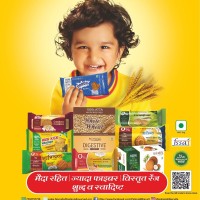
Official page of Patanjali Biscuits & Confectionary
IN
Private
$1.1B Revenue
http://patanjaliayurved.net
87 Employees
Top Charkha Employees
-

Chetna V.
Chief Executive Officer at Charkha
New Delhi, DL, IN1 -

Ananya Vasishtha
Program Manager at Charkha
New Delhi, DL, IN2 -
Uzma S.
Program Manager at Charkha
Delhi, India1 -

Ayushya Singh
Senior Consultant at Charkha
New Delhi, DL, IN1 -
Aatifa Naqvi
Project Associate at Charkha
New Delhi, DL, IN1 -
Jasmine Grover
Senior Program Associate at Charkha
Delhi, India1 -

Nidhi Tak
Saksham fellow at Charkha
Bikaner, RJ, IN -
Kalpana Bisht
Ultimate Frisbee Coach (Consultant) at Charkha
New Delhi, DL, IN


Related Companies




















G2Crowd Trusted

300K+
Plugin Users
