


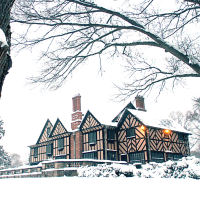
View Agecroft Hall's top competitors like Agecroft Hall & Gardens, American Civil War Museum, and Berkeley Plantation.
Most people know that the National Park Service cares for national parks, a network of over 420 natural, cultural and recreational sites across the nation. The treasures in this system – the first of its kind in the world – have been set aside by the American people to preserve, protect, and share the legacies of this land.
People from all around the world visit national parks to experience America's story, marvel at the natural wonders, and have fun. Places like the Grand Canyon, the Statue of Liberty, and Gettysburg are popular destinations, but so too are the hundreds of lesser known yet equally meaningful gems like Rosie the Riveter in California, Boston Harbor Islands in Massachusetts, and Russell Cave in Alabama.
The American system of national parks was the first of its kind in the world, and provides a living model for other nations wishing to establish and manage their own protected areas. The park service actively consults with these Nations, sharing what we've learned, and gaining knowledge from the experience of others.
Beyond national parks, the National Park Service helps communities across America preserve and enhance important local heritage and close-to-home recreational opportunities. Grants and assistance are offered to register, record and save historic places; create community parks and local recreation facilities; conserve rivers and streams, and develop trails and greenways.
Washington, District of Columbia, US
Government
$6.6M Revenue
http://www.nps.gov
12.7K Employees

VMFA is a state-supported, privately endowed educational institution created for the benefit of the citizens of the Commonwealth of Virginia. Its purpose is to collect, preserve, exhibit, and interpret art, to encourage the study of the arts, and thus to enrich the lives of all.
Richmond, Virginia, US
Private
$32.4M Revenue
http://www.vmfa.museum
517 Employees

Lewis Ginter Botanical Garden’s mission is education and our passion is connecting people and plants to improve communities. Our goal is to extend beyond traditional boundaries to have a positive impact and to enrich lives. The Garden is growing fresh produce for the hungry; actively participating in urban greening and water management initiatives; contributing to economic development and work-force training; and educating diverse youth and adult audiences about critical issues related to the interdependence of plants and people.
Our Mission affirms the Garden as a primary resource for learning about the botanical world—its beauty, heritage, and significance to the web of life.
Lewis Ginter Botanical Garden connects people through plants to improve communities.
Our Vision builds upon our accomplishments and expanded presence and responsibility as we have transformed from a local attraction to a national place of excellence.
Lewis Ginter Botanical Garden, including the new Lewis Ginter Nature Reserve, reveals the unity and integration of human and plant life, celebrates the fundamental significance of the natural world, and enriches communities through horticultural and educational excellence and innovative outreach initiatives.
Richmond, Virginia, US
Non profit
$2M Revenue
http://www.lewisginter.org/
123 Employees


G2Crowd Trusted

300K+
Plugin Users
