


View ACES,CUSAT's top competitors like Birla Institute of Technology, Mesra, Indian Institute of Science (IISc), and Indian Institute of Technology, Bombay.
The Indian Institute of Science (IISc) was founded in 1909 as a result of the joint efforts of Jamsetji Nusserwanji Tata, the Government of India, and the Maharaja of Mysore. In 1886, Jamsetji Tata conceived of a university of science that would work for the benefit of India, and in 1898 created an endowment for establishing such an institution. The Government of India then took up the effort, and, in consultation with scientists in England and in India, decided to locate the Institute in Bengaluru, where the Maharaja of Mysore, Shri Krishnaraja Wodeyar IV, donated 372 acres of land. The Institute was formally vested in 1909, the foundation stone was laid in 1911, and the first batch of students started their studies in the same year.
Over the last century, IISc has become the premier institute for advanced scientific and technological research and education in India. Beginning with 2 departments and 21 students in 1911, today IISc has 39 departments, units, or centres, 3500 students, and about 500 academic and scientific staff, supported by 600 administrative personnel. About 2200 students are in various PhD programs, almost 900 are enrolled for various Masters degrees, whereas about 400 are registered in the newly established, research oriented, four-year Bachelor of Science (Research) programme.
In recent years, the Institute has vigorously promoted interdisciplinary research. New centres such as the CiSTUP, the Robert Bosch Centre for Cyber Physical Systems and a new Centre for Brain Research (funded by a large private endowment) are expected to conduct translational research in their respective areas, in order to better connect with industry and society. With the recent construction of modern buildings, acquisition of new research facilities, and induction of a large number of new faculty members, the Institute can look forward to an era of high productivity, increasing impact, and rising prominence in the world.
Science Institute, IN
Private
$140.7M Revenue
http://www.iisc.ac.in/
7.3K Employees
Indian Institute of Technology Madras is one among the foremost institutes of national importance in higher technological education, basic and applied research. In 1956, the German Government offered technical assistance for establishing an institute of higher education in engineering in India. The first Indo-German agreement in Bonn, West Germany for the establishment of the Indian Institute of Technology at Madras was signed in 1959.
The Institute was formally inaugurated in 1959 by Prof. Humayun Kabir, Union Minister for Scientific Research and Cultural Affairs. The IIT system has sixteen Institutes of Technology. The first of these to be instituted are at Kharagpur (estb. 1951), Mumbai (estb. 1958), Chennai (estb. 1959), Kanpur (estb. 1959), Delhi (estb. 1961), Guwahati (estb. 1994) and Roorkee (estb. 1847, joined IITs in 2001).
IIT Madras is a residential institute with nearly 550 faculty, 8000 students and 1250 administrative & supporting staff and is a self-contained campus located in a beautiful wooded land of about 250 hectares. It has established itself as a premier centre for teaching, research and industrial consultancy in the country.
The Institute has sixteen academic departments and a few advanced research centres in various disciplines of engineering and pure sciences, with nearly 100 laboratories organised in a unique pattern of functioning. A faculty of international repute, a brilliant student community, excellent technical & supporting staff and an effective administration have all contributed to the pre-eminent status of IIT Madras. The campus is located in the city of Chennai, previously known as Madras. Chennai is the state capital of Tamilnadu, a southern state in India.
Chennai, IN
Private
$12.2M Revenue
http://www.iitm.ac.in/
7.3K Employees
Indian Institute of Technology Bombay, the second IIT to be set up in 1958, is recognised worldwide as a leader in the field of engineering education and research. It is reputed for the quality of its faculty and the outstanding calibre of students graduating from its undergraduate and postgraduate programmes. The institute has a total of 15 academic departments, 30 centres, one school and five Interdisciplinary programmes. Over the last five decades, more than 52,600 engineers and scientists have graduated from the institute. It is served by more than 650 faculty members considered not only amongst the best within the country, but also highly recognised in the world for achievements in the field of education and research. Today the Institute is recognized as one of the top centres of academic excellence in the country. Over the years, there has been dynamic and rapid progress at IIT Bombay in both academic and research activities, with a parallel improvement in facilities and infrastructure to match with the best institutions in the world.
Mumbai, IN
Private
$746.7M Revenue
http://www.iitb.ac.in/
10.2K Employees
Top ACES,CUSAT Employees
-
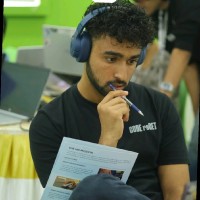
Sajad Malla
Tech Team at ACES,CUSAT
Kochi, KL, IN -
Afnash P
Technical Lead at ACES,CUSAT
Kochi, KL, IN -
Jyothi S
Outreach Team lead at ACES,CUSAT
Kochi, KL, IN


Related Companies

How It Works

Get a Free Account
Sign up for a free account. No credit card required. Up to 5
free lookups.

Search the #1
Contact Database
Get contact details of over 700M profiles across 60M
companies – all with industry-leading accuracy. Sales and Recruiter users, try out our
Email Finder Extension.

Use our
AI-Powered
Email Finder
Find business and personal emails and mobile phone numbers
with exclusive coverage across niche job titles, industries, and more
for unparalleled targeting. Also
available via our
Contact Data API.


G2Crowd Trusted

300K+
Plugin Users
